Winemaking Chianti
- wine zones
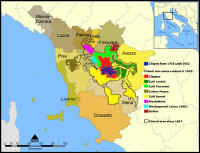
- is divided into specific zones:
Chianti Classico, Colli
Fiorentini, Colli
Senesi, Colli Aretini, Colline Pisane, Montalbano, Montespertoli and
Rùfina. The origin of Chianti wine has very ancient roots but
its composition was codified only in the 19 C. It obtained the DOC recognition in 1967 and the DOCG recognition in
1984.
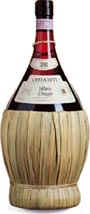
Chianti wine is ruby-red in colour, tending to burgundy with age, with a harmonious taste, dry and fruity, slightly tannic, with an intensely
vine-based scent accompanied by its characteristic perfume of
violets. Chianti can be consumed as a young wine, fresh and pleasing to the palate. Its suitability to medium and long periods of
aging - during which its colour, perfume and unique taste mature - is extremely
dependent on the winemaker and the year.
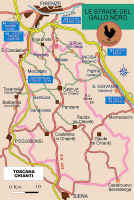
The Chianti Classico (Gallo
Nero) wine zone
- this small part of the Chianti wine zone is located between Florence and Siena, between the valleys of the
Greve, Pesa and
Elsa
rivers and the Chianti
hills. In this territory, inhabited in ancient times by the
Etruscans
and the Romans and
the battleground between Florence and Siena in the Middle Ages, towns, castles, and fortresses were constructed that later were transformed into villas and residences. The first official document regarding the wine dates from 1404, while other documents of the 1600s describe how the exportation of Chianti began to be an important commercial factor. In the 1700s, with the agricultural rebirth of Tuscany and the
organisation of the sharecropping system, the cultivation of the vines was firmly established.
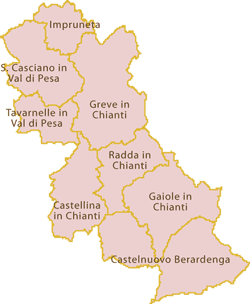
The 70,000 hectares of the Chianti Classico region include the districts of
Barberino Val
d'Elsa,
Castellina in Chianti, Castelnuovo
Berardenga, Colle Val d'Elsa,
Gaiole in Chianti,
Greve in Chianti,
Impruneta, Monteriggioni,
Radda in Chianti,
San Gimignano, and Tavarnelle Val di Pesa.
The
wines produced in the Chianti Classico wine zone are classified as DOCG, DOC, IGT and VDT Tuscan
wines. This
classification denotes the quality class of the wine for the most part. The
major exception is that excellent wines that don't fit the blend requirements
are allocated to IGT - these are the so-called Super
Tuscan wines.
Wine
tasting tours in Tuscany
|
|
tuscan
wine tours
|
Wine
tasting and sightseeing tours in Tuscany with
Angela
Angela
Saltafuori, an English-speaking, licensed guide
and sommelier, drives groups of 2 to 8 visitors
in a comfortable, air-conditioned minibus
to visit Chianti wineries and taste Chianti wines.
Classic wine tasting itineraries for shared
wine tours and customised private wine
tasting tours or sightseeing tours based on
your wishes. More
about wine tasting tours in Tuscany.
|
|
|
|
The Chiantigiana highway
The
Chianti Classico wine zone is traversed by Strada Statale 222, the
"Via Chiantigiana", a picturesque
"wine road" dating from the 1700s. Travelling the Chiantigiana wine
road, you can enjoy
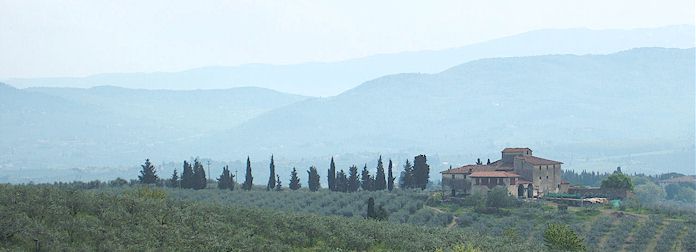
every aspect of the landscape, with its cultivation of grapes and olives, and
resplendent with country
houses, abbeys
and churches,
towers and castles.
Chianti
is particularly rich in Romanesque parish churches.
Many of the more interesting of these 'pievi' can be visited during the course
of a single day's motoring excursion by following the Via Chiantigiana and
making a few short detours.
In addition to its vernacular,
military and religious
architecture, the Chianti area is characterised by natural beauty and by
characteristic gastronomic products such as olive oil, wild game, tasty dried meats, hearty ribollita soup, Tuscan crostini, and the delicious dry
walnut biscuits to dip in Tuscan Vin Santo, to name but a few.
|
)
)
)
)
)
)
)
)
)
)